


Publish date:
Choosing the right Salesforce consulting partner can significantly affect how successfully your organization implements, integrates, and scales Salesforce.
A Salesforce consulting partner is a company with Salesforce expertise that helps businesses plan, configure, implement, integrate, optimize, and support Salesforce solutions. Depending on your requirements, a partner may provide everything from CRM strategy and implementation to data migration, integrations, Agentforce, Data Cloud, training, and ongoing Salesforce consulting services.
What Is a Salesforce Consulting Partner?
A Salesforce consulting partner is a consulting firm that helps organizations get more value from the Salesforce platform through strategy, technical expertise, implementation, customization, integration, and ongoing optimization.
The right partner should offer more than Salesforce certifications. Businesses should evaluate industry experience, relevant competencies, customer outcomes, technical expertise, delivery methodology, post-launch support, and experience with the Salesforce products they plan to use.
Salesforce has also updated its Consulting Partner Program for FY27. The program now emphasizes Summit and Select partner tiers, supported by outcome-based competencies that consider certifications, completed projects, and customer satisfaction.
This guide explains how Salesforce consulting partners differ, what services they provide, how to evaluate a Salesforce consultant, what Salesforce consulting can cost, and how to shortlist the right partner for your business.
How the Salesforce Consulting Partner Landscape Is Changing in 2026
The Salesforce partner ecosystem is becoming more focused on specialization, verified delivery experience, and measurable customer outcomes.
One of the biggest changes is Salesforce's FY27 Consulting Partner Program. Salesforce has simplified the previous four-tier structure to two primary tiers: Summit and Select. Salesforce has also replaced its broad Navigator framework with 28 outcome-based Competencies designed to make partner expertise easier for customers to evaluate.
What Do the New Salesforce Partner Tiers Mean?
| Partner Status | What It Means |
|---|---|
| Summit | Salesforce's top consulting partner tier, recognizing partners based on factors such as competencies, sourced ACV, customer consumption, and strategic importance. |
| Select | Established Salesforce consulting partners with a demonstrated delivery record that meet Salesforce's program requirements. |
| Provisional | New consulting partners completing onboarding and working toward the requirements needed to enter the Select tier. |
For businesses evaluating a Salesforce consulting partner, this change makes partner tier useful—but tier alone should not determine your decision.
Salesforce's new Competencies provide additional context around a partner's expertise. Competencies are evaluated using factors including relevant certifications, completed customer projects, and customer satisfaction.
That means businesses comparing Salesforce consulting partners should look beyond the number of certifications a firm displays. Relevant project experience, product expertise, industry knowledge, customer outcomes, integration capabilities, and ongoing support matter just as much.
What Has Changed for Salesforce Customers?
The Salesforce ecosystem is also evolving around AI, data, automation, and increasingly complex integrations.
Organizations may now need a partner that can connect traditional Salesforce consulting services with capabilities across Agentforce, Data Cloud, MuleSoft, analytics, industry solutions, and third-party systems.
As a result, the best-fit partner is not necessarily the largest firm or the company with the longest list of credentials. It is the one with proven experience solving requirements similar to yours and the technical capability to support the Salesforce environment as it evolves.
How to Evaluate a Salesforce Consulting Partner Beyond Partner Tier
Salesforce partner status can be a useful starting point, but it should not be the only factor you consider when choosing a Salesforce consulting partner.
A partner may have strong Salesforce credentials but limited experience with your industry, Salesforce products, integration environment, or business model. Before creating a shortlist, evaluate whether the team has solved similar problems.
7 Things to Check Before Choosing a Salesforce Partner
| What to Evaluate | What to Look For | Why It Matters |
|---|---|---|
| Relevant Salesforce expertise | Experience with the Salesforce products included in your project | Reduces the learning curve and helps the team design around real platform capabilities |
| Industry experience | Projects in businesses with workflows or compliance requirements similar to yours | Helps consultants understand requirements beyond CRM configuration |
| Proven project experience | Relevant case studies, project examples, and measurable outcomes | Shows whether the partner has delivered comparable work |
| Competencies and certifications | Salesforce-recognized competencies and certifications relevant to your requirements | Provides additional evidence of technical specialization |
| Integration capabilities | Experience connecting Salesforce with ERP, marketing, finance, support, data, and other business systems | Becomes critical when Salesforce is part of a larger technology stack |
| Delivery methodology | Clear discovery, solution design, implementation, testing, deployment, and adoption process | Makes scope, responsibilities, and project progress easier to manage |
| Post-launch support | Optimization, administration, training, release management, and ongoing support options | Helps Salesforce continue to evolve after go-live |
Ask for Evidence, Not Just Credentials
Before signing a contract, ask shortlisted Salesforce consulting partners to demonstrate relevant experience.
Useful questions include:
-
Have you completed projects with requirements similar to ours?
-
Which Salesforce products does your proposed team specialize in?
-
Can you show a relevant case study and explain the measurable outcome?
-
Who will actually work on our project after the sales process?
-
How do you handle scope changes, testing, data migration, and user adoption?
-
What happens after go-live?
-
Can you provide references for comparable projects?
A good Salesforce consultant should be able to explain not only what they would configure, but why a particular solution fits your processes, users, data, and long-term CRM strategy.
If you are comparing providers for broader Salesforce consulting services, use the same criteria across every shortlisted firm. This makes it easier to compare partners based on relevant evidence, not brand recognition or partner status alone.
Top Salesforce Consulting Partners to Consider in 2026
The Salesforce ecosystem includes global system integrators, specialized consulting firms, regional partners, and boutique teams. The right choice depends on your Salesforce products, industry, project complexity, geography, budget, and preferred delivery model.
To make this comparison more useful, we reviewed Salesforce consulting partners using factors that buyers can evaluate during the selection process.
How We Selected the Partners
The companies included in this guide were reviewed using the following criteria:
-
Salesforce ecosystem credentials: Current partner standing, relevant certifications, and demonstrated Salesforce expertise.
-
Delivery experience: Evidence of completed Salesforce projects and experience with complex implementations.
-
Product expertise: Capabilities across Sales Cloud, Service Cloud, Experience Cloud, Marketing Cloud, Data Cloud, MuleSoft, and Agentforce.
-
Industry experience: Demonstrated work across industries and business use cases.
-
Integration capabilities: Experience connecting Salesforce with ERP, marketing, finance, data, and other enterprise systems.
-
Customer evidence: Public case studies, customer stories, reviews, or other evidence of delivered outcomes.
-
Geographic coverage: Ability to support customers across relevant regions and time zones.
-
Post-launch capabilities: Availability of optimization, administration, training, and ongoing Salesforce support.
This is not a universal ranking of Salesforce firms. Instead, the list helps businesses compare different types of partners and identify which providers may fit their requirements.
Salesforce Consulting Partners at a Glance
| Salesforce Partner | Key Specialization | Best Fit For |
|---|---|---|
| Codleo Consulting | Salesforce consulting, multi-cloud solutions, Agentforce, integrations, and ongoing support | SMB, mid-market, and growing enterprises looking for end-to-end Salesforce expertise |
| Worxwide Consulting | Salesforce implementation, B2B sales transformation, ABM, and customer experience | B2B organizations looking to align Salesforce with sales and go-to-market transformation |
| Bounteous | Marketing Cloud, Experience Cloud, Commerce Cloud, and data-driven customer experiences | Enterprise retailers and consumer brands focused on digital customer experiences |
| Slalom Consulting | Salesforce transformation, change management, AI, and user adoption | Organizations prioritizing Salesforce adoption alongside business transformation |
| SingleStone Consulting | Advisory, Salesforce implementation, optimization, and managed services | Mid-market businesses looking for a more personalized consulting approach |
| Ascendix Technologies | Salesforce consulting, customization, migrations, and multi-cloud projects | Organizations with complex Salesforce customization or migration requirements |
| Zaelab | B2B Commerce, ERP integrations, composable commerce, and AI personalization | Manufacturers and distributors building digital B2B commerce experiences |
| VRP Consulting | Enterprise Salesforce programs, MuleSoft, Tableau, and multi-cloud delivery | Larger organizations with complex integrations and global Salesforce requirements |
| ForteNext | B2B Commerce, integrations, and flexible delivery models | Mid-market and enterprise organizations with Commerce Cloud requirements |
| DemandBlue | Flexible Salesforce support, Sales Cloud, Service Cloud, Marketing Cloud, and Data Cloud | Organizations needing flexible or ongoing Salesforce resources |
| OSF Digital | Commerce Cloud, omnichannel commerce, MuleSoft, and Data Cloud | Global retailers and brands with complex digital commerce requirements |
| RedTag | Data Cloud, Tableau, CRM Analytics, and Salesforce data intelligence | Organizations focused on analytics and data-driven Salesforce initiatives |
Partner capabilities, program status, competencies, and service offerings can change. Businesses should verify current Salesforce credentials and relevant project experience before selecting a partner.
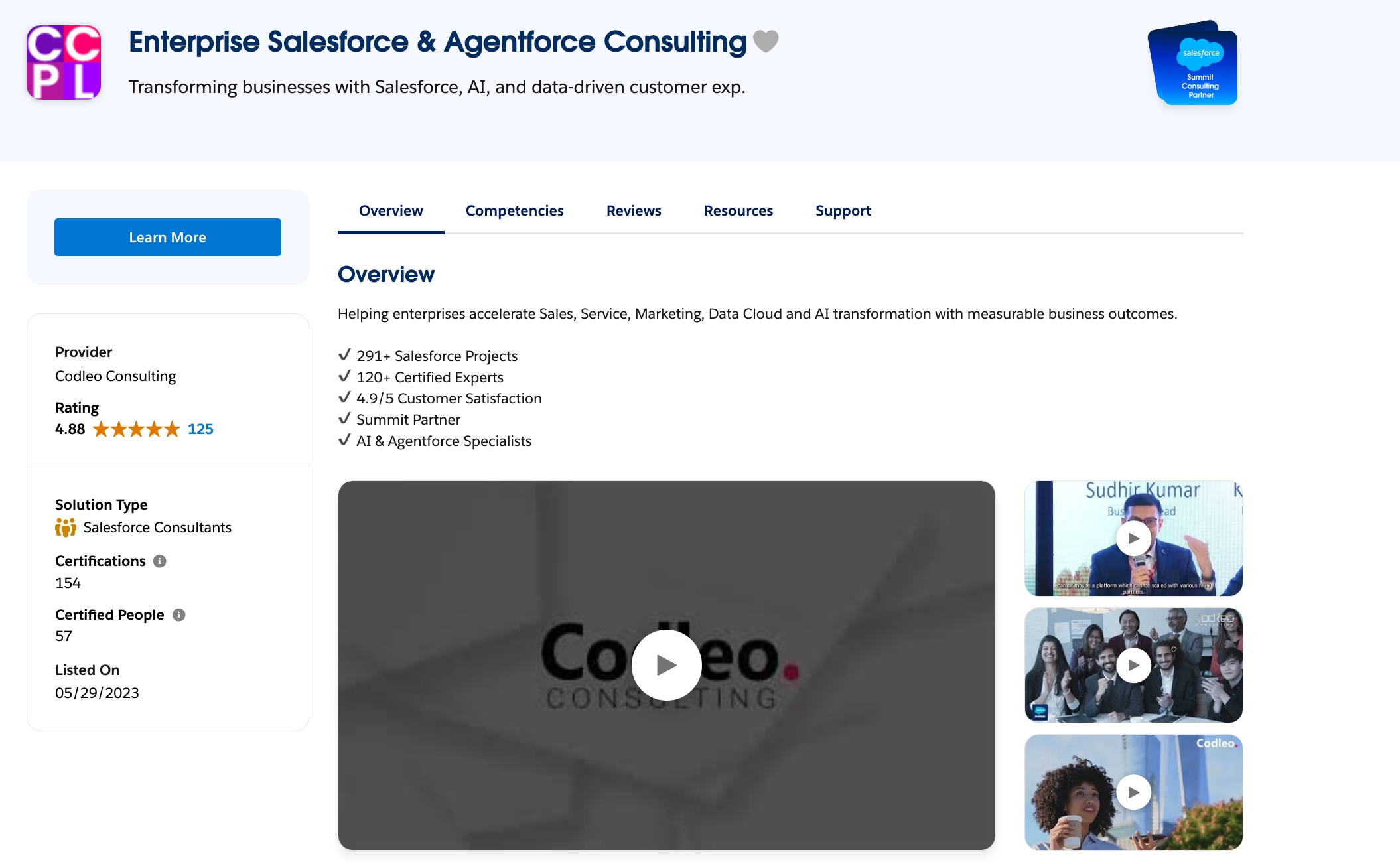
Codleo Consulting
Headquarters: New Delhi, India | Global Presence: USA, UAE & Australia
Salesforce Partner: Summit Partner
What Codleo Consulting Is Known For
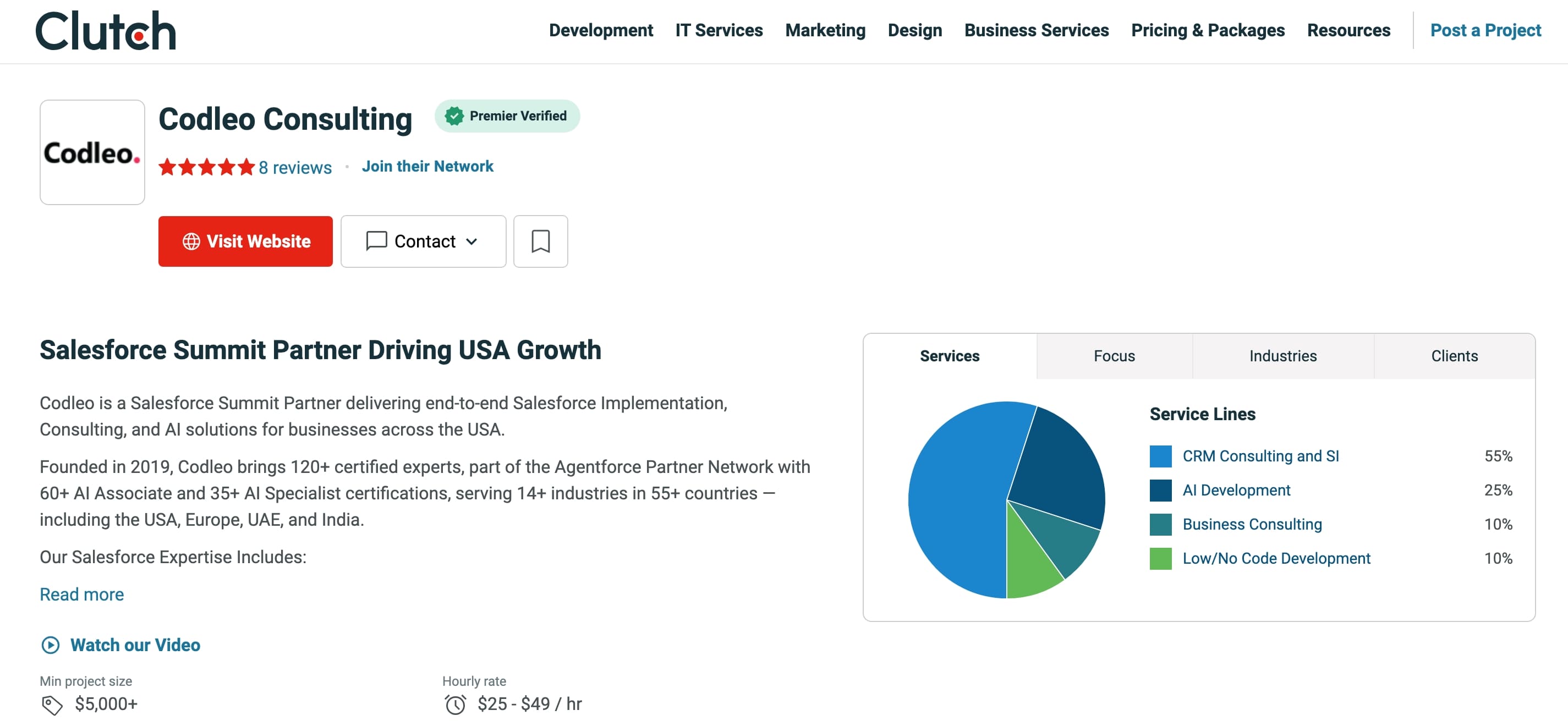
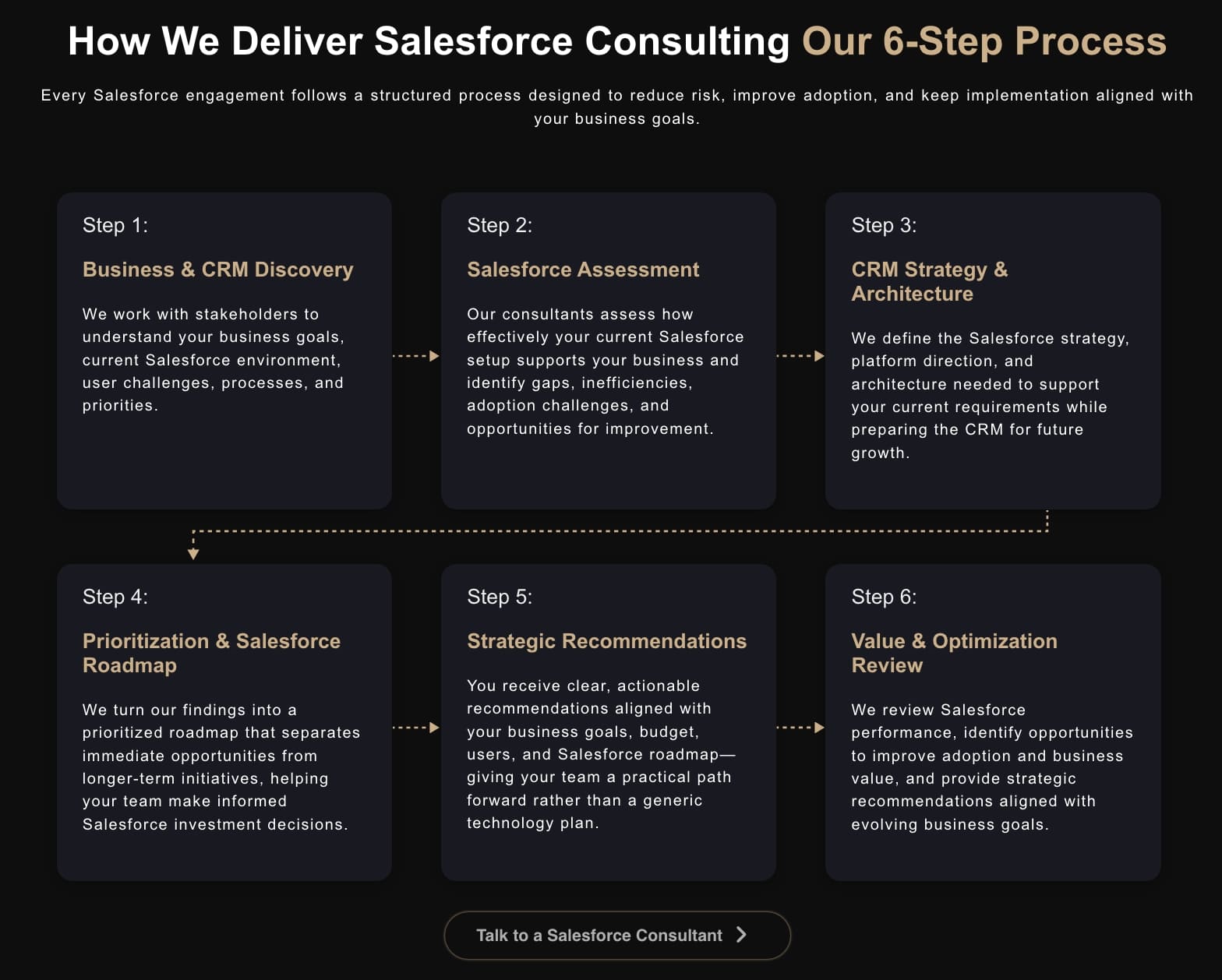
Codleo Consulting is a Salesforce consulting partner providing strategy, implementation, integration, optimization, and ongoing Salesforce support for organizations across multiple industries.
Its capabilities span Sales Cloud, Service Cloud, Experience Cloud, Marketing Cloud, Data Cloud, integrations, and AI-led Salesforce solutions, including Agentforce.
Rather than focusing only on initial implementation, Codleo supports businesses across the Salesforce lifecycle—from discovery and solution design to deployment, adoption, optimization, and long-term platform support.
Key Salesforce Capabilities
-
Salesforce Consulting: CRM assessment, solution architecture, roadmap development, and platform optimization
-
Salesforce Implementation: Configuration and deployment aligned with business processes and user requirements
-
Salesforce Integration: Connecting Salesforce with ERP, marketing, finance, customer service, and other business systems
-
Agentforce & AI: Designing AI agents and automation use cases within the Salesforce ecosystem
-
Data & Analytics: Supporting connected customer data, reporting, and data-driven Salesforce experiences
-
Ongoing Support: Administration, enhancements, optimization, training, and post-launch assistance
Industries Served
Codleo has Salesforce delivery experience across industries including healthcare, education, retail, real estate, financial services, and nonprofit organizations.
This industry exposure can be particularly useful when Salesforce needs to support specialized workflows, customer journeys, reporting requirements, integrations, or compliance considerations.
Why Organizations Consider Codleo
Organizations evaluating Salesforce consulting services may consider Codleo when they need:
-
An end-to-end Salesforce team rather than separate vendors for consulting, implementation, integration, and support
-
Experience across multiple Salesforce products
-
Agentforce and AI capabilities alongside traditional CRM expertise
-
Industry-specific Salesforce experience
-
A global delivery model supporting organizations across multiple regions
-
Continued Salesforce optimization after implementation
Best fit: Organizations looking for a Salesforce partner that combines consulting, technical delivery, AI capabilities, integrations, and ongoing platform support in a single engagement.
Worxwide Consulting
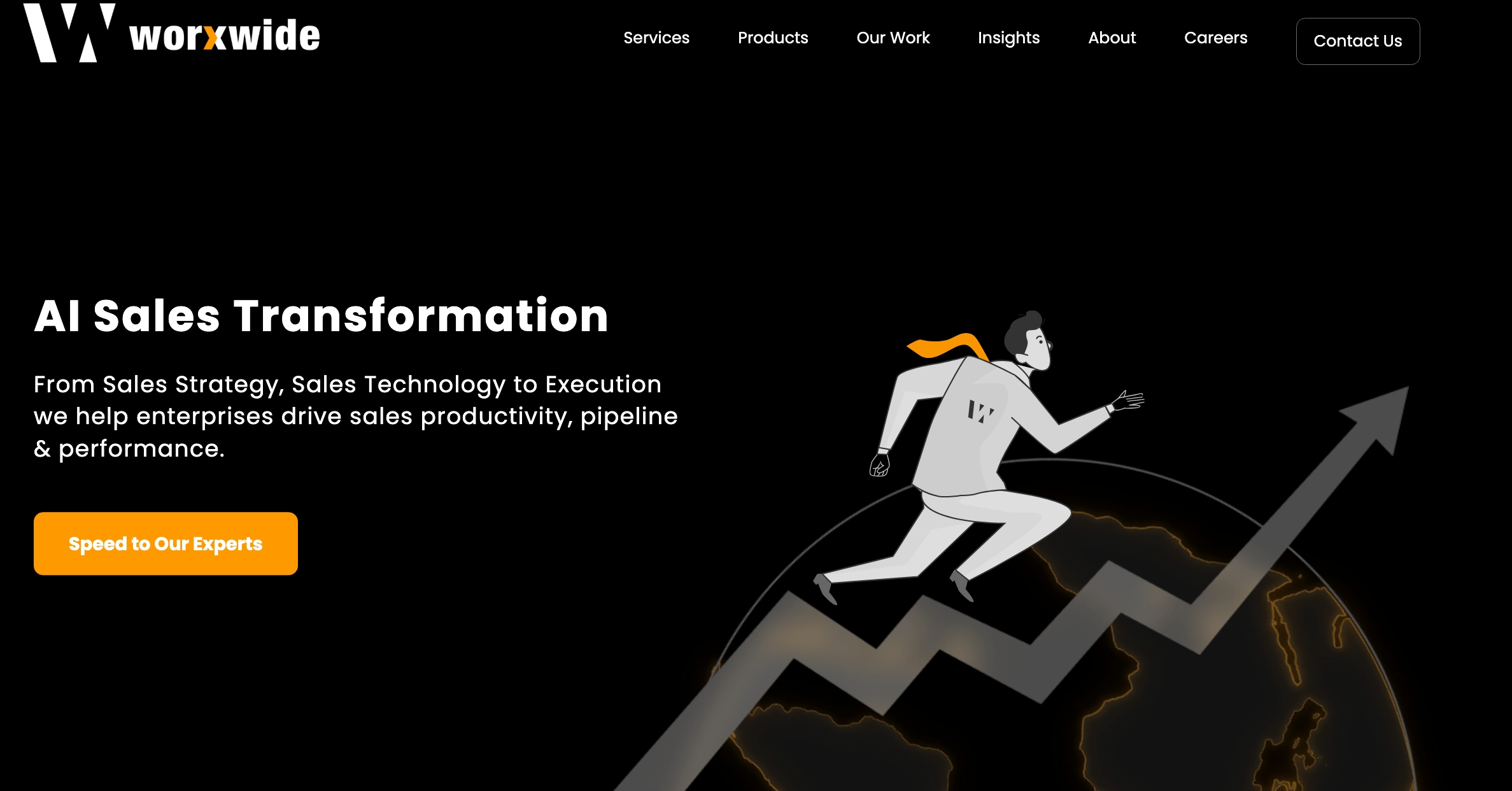
Tier: Ridge–Crest | Size: 60+ certified consultants | HQ: Nationwide USA & Europe
What they're known for:
Worxwide isn't your typical Salesforce implementation firm. They started in bid and proposal management in 2016 and evolved into a hybrid consulting shop that treats Salesforce implementation as sales transformation, not just technology deployment. This matters—a lot.
The Unique Approach:
Worxwide combines three things most Salesforce partners keep separate:
-
Salesforce Implementation (Sales Cloud, Service Cloud, Marketing Cloud, Agentforce)
-
Account-Based Marketing (ABM) Strategy (not just lead generation—strategic accounts)
-
Customer Experience (CX) Design (how deals feel, not just how pipelines look)
This means when they implement Salesforce, they're simultaneously redesigning your go-to-market strategy. Your CRM isn't a tool someone uses—it becomes a strategic asset that drives revenue.
Strengths:
-
Deep B2B Expertise – Specializes in complex B2B sales cycles (manufacturing, financial services, technology, software)
-
ABM-Native Thinking – They understand high-value accounts require different processes, messaging, and tooling than transactional deals
-
Outcome-Driven Pricing – Uses milestone-based and outcome-focused pricing rather than open-ended time-and-materials (reduces scope creep, aligns incentives)
-
Sales Process Redesign – Not just configuring Salesforce—they redesign your sales methodology to match your market
-
Adoption First – Their implementations prioritize user adoption from day one (many partners focus on "features deployed" vs. "people using it")
-
60+ Global Client Track Record – Mid-market focus means they've solved problems similar to yours
Industries They Dominate:
-
Manufacturing/CPG – Complex sales, multiple stakeholders, long deal cycles
-
BFSI (Banking, Financial Services, Insurance) – Compliance, data security, relationship-based selling
-
IT Services & Software – High competition, need for competitive differentiation through CX
Typical Use Case:
A manufacturing company with a $50M revenue base wants to grow to $100M. They have a strong product, but their sales process is ad hoc—each rep does it differently. Worxwide would:
-
Map the current sales process (discover what's working, what's broken)
-
Design an ABM strategy (identify high-value accounts worth extra investment)
-
Implement Salesforce Sales Cloud + Marketing Cloud integration
-
Redesign the sales methodology (so every rep follows a proven playbook)
-
Train teams on the new process + system (adoption-first approach)
-
Measure ROI (deal velocity, win rates, forecast accuracy)
Result: Sales predictability increases. Reps are empowered. Marketing and sales align. The Salesforce system becomes a profit center, not just a data repository.
Typical Project Cost: $75K–$300K | Timeline: 10–16 weeks | Best For: B2B companies that see Salesforce as a strategic business tool, not just an administrative system.
Why Consider Worxwide Over Others:
-
If you want sales transformation, not just system implementation
-
If your sales process is ad-hoc and needs standardization
-
If you're pursuing account-based marketing (high-value accounts matter)
-
If you want outcome-based pricing (they succeed when you succeed)
-
If you're a mid-market B2B company (they specialize here, not enterprise-only)
Bounteous
Tier: Summit (Platinum) | Size: 4,400 employees | HQ: Chicago, Illinois
What they're known for:
Bounteous merges creativity with data orchestration. They specialize in designing customer journeys across Marketing Cloud, Experience Cloud, and Commerce Cloud—combining campaign strategy with technical delivery.
Strengths:
-
Co-innovation model (their teams integrate directly with yours)
-
Expert at Data Cloud unification and Einstein analytics
-
Fortune 500 track record with complex data integrations (Adobe, Google Cloud, Snowflake)
-
Strong on ROI measurement and adoption strategy
Typical project cost: $200K–$1M+ | Timeline: 14–24 weeks (enterprise)
Best for: Enterprise retailers and consumer brands needing experience-led transformation with measurable ROI focus.
Slalom Consulting

Tier: Summit | Size: 13,000+ employees | HQ: Seattle, Washington
What they're known for:
Slalom is recognized for human-centric consulting. They balance technical delivery with change management—something larger firms often skip.
Strengths:
-
Ranked consistently in Fortune's 100 Best Companies to Work For (a proxy for team quality)
-
Strong Agentforce and Generative AI Accelerators
-
45+ markets globally, deep local expertise
-
Emphasis on sustainable adoption (not just implementation)
Typical project cost: $150K–$750K+ | Timeline: 12–20 weeks
Best for: Organizations prioritizing user adoption and long-term success over speed.
SingleStone Consulting
Tier: Summit | Size: 75 employees | HQ: Richmond, Virginia
What they're known for:
A boutique firm that thinks and acts like a consultant, not a vendor. Their smaller size means faster, more personalized decision-making.
Strengths:
-
Highly attentive, relationship-driven approach
-
End-to-end services (advisory, implementation, optimization, managed services)
-
Fixed-fee and flexible pricing options
-
Strong in nonprofits, healthcare, and financial services
Typical project cost: $25K–$500K | Timeline: 8–18 weeks
Best for: Mid-market organizations that value personal relationships and specialized industry expertise.
Ascendix Technologies
Tier: Summit | Size: 150+ certified consultants | HQ: San Francisco, California
What they're known for:
Ascendix focuses exclusively on Salesforce (no distractions into adjacent consulting). They've completed 1,500+ projects and won the Salesforce Partner Innovation Award 5 times.
Strengths:
-
Salesforce-only focus ensures deep platform expertise
-
Strong in Lightning transformation and CPQ implementations
-
Fast turnaround on complex data migrations
-
Competitive pricing for a Summit firm
Typical project cost: $25K–$1M+ | Timeline: 8–16 weeks
Best for: Companies with complex multi-cloud or migration needs who want a specialist.
Zaelab
Tier: Summit | Size: 400+ employees | HQ: Westport, Connecticut
What they're known for:
Zaelab has become synonymous with B2B Commerce Cloud. They're the go-to partner for manufacturers and distributors moving to digital sales channels.
Strengths:
-
Proprietary Commerce Accelerator (storefronts in weeks, not months)
-
Deep ERP-to-Salesforce integration expertise
-
Headless commerce and composable architecture leadership
-
Agentforce and AI personalization capabilities
Typical project cost: $100K–$500K+ | Timeline: 10–20 weeks
Best for: Manufacturers, distributors, and B2B companies needing to digitize sales operations fast.
VRP Consulting
Tier: Summit | Size: 500+ employees | HQ: San Francisco, California
What they're known for:
Founded in 1998, VRP is one of the oldest Salesforce partners and still innovating. Their "Center of Excellence" framework ensures quality and consistency.
Strengths:
-
Proven experience on multi-year, enterprise-scale deployments
-
Global delivery (USA, Europe, LATAM) with continuous coverage
-
Deep MuleSoft and Tableau integration knowledge
-
Strong in manufacturing, healthcare, and financial services
Typical project cost: $150K–$2M+ | Timeline: 12–24 weeks
Best for: Large enterprises with complex integrations and global requirements.
ForteNext
Tier: Summit | Size: 120+ specialists | HQ: Boca Raton, Florida
What they're known for:
ForteNext pioneered the "hybrid outsourcing" model (onshore + nearshore delivery). They've completed 60+ B2B Commerce Cloud implementations—more than most competitors.
Strengths:
-
Specialized in B2B Commerce Cloud and complex integrations
-
Global staff augmentation service for flexible scaling
-
Fixed-fee project delivery with clear scope management
-
Strong in manufacturing, healthcare, retail
Typical project cost: $80K–$400K | Timeline: 10–18 weeks
Best for: Mid-market and enterprise organizations needing expert Commerce Cloud or staff flexibility.
DemandBlue
Tier: Crest | Size: 110+ employees | HQ: Irvine, California
What they're known for:
DemandBlue flipped the traditional engagement model with consumption-based pricing. Pay for only the hours/resources you use—no long-term contracts.
Strengths:
-
Flexible "On Demand" service model (perfect for variable needs)
-
Affordable for SMBs and nonprofits
-
Expertise in Sales Cloud, Service Cloud, Marketing Cloud, CPQ, Pardot
-
Strong on Data Cloud and Einstein Analytics enablement
Typical project cost: $5K–$150K (depending on engagement) | Timeline: Ongoing
Best for: Organizations with changing requirements, limited budgets, or those seeking hybrid in-house + partner models.
OSF Digital
Tier: Summit | Size: 2,200+ employees | HQ: Quebec City, Canada
What they're known for:
OSF Digital is the global leader in Commerce Cloud implementations. If you need a Salesforce storefront, OSF has likely built one.
Strengths:
-
Unmatched Commerce Cloud portfolio (enterprise retailers trust them)
-
"Connected4Commerce" framework for omnichannel experiences
-
Strong MuleSoft and Data Cloud practices
-
Global scale with local expertise
Typical project cost: $200K–$2M+ | Timeline: 14–26 weeks (for complex commerce)
Best for: Global retailers and brands needing sophisticated omnichannel Commerce Cloud deployments.
What Services Do Salesforce Consulting Partners Provide?
Salesforce consulting partners help businesses plan, implement, integrate, customize, optimize, and support Salesforce based on their operational and technology requirements.
While the exact scope varies by firm, Salesforce consulting services typically cover the complete CRM lifecycle—from initial strategy and solution design to implementation, user adoption, and ongoing optimization.
Core Salesforce Consulting Services
| Service | What a Salesforce Partner Typically Does | When You May Need It |
|---|---|---|
| Salesforce Consulting & Strategy | Evaluates business processes, CRM challenges, requirements, and existing technology before creating a Salesforce roadmap | Before a new Salesforce investment, major expansion, or CRM transformation |
| Salesforce Implementation | Configures Salesforce products, workflows, automation, security, reports, and business processes | When deploying Salesforce for the first time or launching a new Salesforce product |
| Salesforce Integration | Connects Salesforce with ERP, marketing, finance, customer service, data, and other business applications | When customer or operational data is spread across multiple systems |
| Customization & Development | Builds custom workflows, applications, components, and functionality where standard configuration is insufficient | When business processes require capabilities beyond out-of-the-box Salesforce |
| Data Migration | Cleans, maps, transforms, migrates, and validates data moving into Salesforce | When replacing a legacy CRM or consolidating customer data |
| Agentforce & AI Enablement | Identifies AI use cases, prepares Salesforce data, designs agents and automation, and integrates AI into business workflows | When introducing AI-powered service, sales, or operational automation |
| Training & Adoption | Trains users, supports change management, and helps teams adopt new Salesforce processes | When low adoption could reduce the value of a Salesforce investment |
| Managed Support & Optimization | Provides administration, enhancements, troubleshooting, release support, and continuous platform improvement | When an organization needs Salesforce expertise after go-live |
Consulting vs. Implementation vs. Ongoing Support
These services solve different problems.
-
Salesforce consulting determines what to build and how Salesforce should support business goals.
-
Implementation turns that strategy into a working Salesforce environment through configuration, customization, migration, integration, testing, and deployment.
-
Ongoing support keeps the platform aligned with changing business requirements after launch.
Some organizations hire different providers for each stage. Others prefer one Salesforce consulting partner that can support the entire lifecycle, reducing handoffs between strategy, implementation, and post-launch teams.
When Should You Hire a Salesforce Consultant?
Consider bringing in a Salesforce consultant when your internal team lacks the time or specialized expertise required to:
-
Select the right Salesforce products and architecture
-
Redesign complex CRM or customer-facing processes
-
Migrate data from legacy systems
-
Integrate Salesforce with business-critical applications
-
Improve an underperforming Salesforce environment
-
Introduce Data Cloud, Agentforce, or advanced automation
-
Improve user adoption and governance
-
Scale Salesforce as business requirements become more complex
The scope of the engagement should ultimately depend on the business problem you need to solve—not simply on the number of Salesforce products you plan to deploy.
How Much Does a Salesforce Consulting Partner Cost?
The cost of hiring a Salesforce consulting partner varies significantly based on project scope, Salesforce products, integrations, data complexity, customization, team structure, and the level of post-launch support required.
A focused optimization or advisory engagement may require a relatively small investment, while a multi-cloud transformation involving complex integrations, data migration, custom development, and AI can require a substantially larger budget.
What Determines Salesforce Consulting Costs?
| Cost Factor | How It Can Affect Your Budget |
|---|---|
| Project scope | A focused Sales Cloud deployment generally requires fewer resources than a multi-cloud transformation |
| Salesforce products | Projects involving multiple clouds or specialized products typically require broader expertise |
| Data migration | Large, inconsistent, or poorly structured legacy datasets increase migration and validation effort |
| Integrations | ERP, finance, marketing, ecommerce, and other third-party integrations can increase architecture and development requirements |
| Customization | Custom applications, complex automation, Apex development, and specialized workflows add development and testing effort |
| AI & Agentforce | AI projects may require additional work around data readiness, security, agent design, testing, and governance |
| User count & complexity | Larger organizations may require more roles, permissions, training, testing, and change management |
| Post-launch support | Managed services and continuous optimization add ongoing costs beyond the initial implementation |
Common Salesforce Consulting Pricing Models
Salesforce consulting firms typically structure engagements using one or a combination of these models:
-
Fixed-price projects work well when requirements, scope, deliverables, and timelines are clearly defined.
-
Time and materials can be more suitable when requirements may evolve, or the project includes significant discovery and customization.
-
Dedicated team or staff augmentation gives organizations additional Salesforce specialists who work alongside internal teams.
-
Managed services retainers provide ongoing administration, enhancements, troubleshooting, release support, and optimization after go-live.
Don't Compare Salesforce Partners on Price Alone
The lowest proposal is not always the lowest-cost project over its full lifecycle.
When comparing Salesforce consulting services, review what each proposal actually includes: discovery, solution architecture, configuration, integrations, data migration, testing, training, documentation, deployment, and post-launch support.
A proposal that initially appears more expensive may include work that another provider treats as a change request or separate engagement.
Ask every shortlisted partner to clearly document:
-
What is included and excluded from the scope
-
Key assumptions and dependencies
-
Team roles and seniority
-
Estimated timeline and milestones
-
Change-request process
-
Post-launch support
-
Ownership of documentation and deliverables
This makes proposals easier to compare on scope, expertise, and expected business value—not just the headline price.
How to Choose the Right Salesforce Consulting Partner
Choosing a Salesforce consulting partner should start with your business requirements—not with a list of certifications or a sales presentation.
The goal is to find a team with relevant Salesforce expertise, an understanding of the problem you are trying to solve, and experience with comparable projects.
A 5-Step Salesforce Partner Shortlisting Process
1. Define the business problem first
Document what needs to improve before approaching partners. This could include poor CRM adoption, disconnected systems, manual processes, unreliable reporting, a legacy CRM migration, or introducing Agentforce and AI.
Also define the Salesforce products involved, expected integrations, users, timeline, and desired business outcomes.
2. Create a shortlist based on relevant experience
Look for Salesforce consulting partners with experience that closely matches your project.
For example, a partner with deep Commerce Cloud expertise may be a strong fit for an ecommerce transformation but not necessarily the right choice for a complex Financial Services Cloud project.
Relevant experience matters more than the total number of projects completed.
3. Ask for comparable project evidence
Request case studies or customer references involving similar:
-
Salesforce products
-
Industries or business processes
-
Integration requirements
-
Data complexity
-
Project scope
-
Business objectives
Don't stop at “Have you worked in our industry?” Ask what problem was solved, how the solution was designed, and what changed after implementation.
4. Meet the team that will actually deliver the project
The people involved during the sales process may not be the same people responsible for delivery.
Before signing, understand who will serve as the solution architect, project manager, developers, administrators, consultants, and support team.
A good Salesforce consultant should explain technical decisions in terms of business impact rather than simply recommending more customization.
5. Compare proposals using the same criteria
Evaluate shortlisted partners using a consistent scorecard covering:
| Evaluation Area | Questions to Ask |
|---|---|
| Relevant experience | Have they delivered projects similar to yours? |
| Solution approach | Does the proposed architecture address the underlying business problem? |
| Delivery team | Who will actually work on the engagement? |
| Integration expertise | Can they work with the other systems in your technology stack? |
| Data strategy | How will migration, quality, security, and governance be handled? |
| User adoption | How will users be trained and supported? |
| Project governance | How are milestones, risks, scope changes, and communication managed? |
| Post-launch support | What happens after Salesforce goes live? |
Questions to Ask Before Hiring a Salesforce Partner
During discovery calls, ask each shortlisted firm:
-
Can you show us a project with requirements similar to ours?
-
Which Salesforce products does your proposed team specialize in?
-
Who will be assigned to our project?
-
Which parts of the work will be delivered in-house?
-
How do you manage data migration and integrations?
-
How do you control scope changes and unexpected costs?
-
How will you measure whether the implementation is successful?
-
What documentation will we receive?
-
How do you approach user training and adoption?
-
What support is available after go-live?
Red Flags to Watch For
Be cautious when a provider:
-
Recommends a solution before understanding your requirements
-
Cannot provide relevant project evidence
-
Avoids introducing the proposed delivery team
-
Provides an unusually low estimate without clearly defining scope
-
Cannot explain its approach to data migration or integrations
-
Focuses primarily on certifications rather than customer outcomes
-
Has no clear testing, training, or adoption plan
-
Treats go-live as the end of the engagement without discussing stabilization or support
The right partner should connect Salesforce technology with your business processes, users, data, and measurable objectives. Use evidence from comparable work to validate those capabilities before making a final selection.
What Does a Successful Salesforce Consulting Engagement Look Like?
A successful Salesforce project should solve a measurable business problem—not simply deliver a configured CRM.
While every engagement is different, effective Salesforce projects typically move through four stages: understanding the business challenge, designing the right solution, implementing it with appropriate governance, and measuring what changed after go-live.
From Business Challenge to Salesforce Outcome
| Stage | What Should Happen |
|---|---|
| Business Challenge | Identify the processes, data gaps, customer experience issues, or operational bottlenecks Salesforce needs to address |
| Solution Design | Map business requirements to the appropriate Salesforce products, architecture, integrations, automation, and data model |
| Implementation | Configure, customize, integrate, migrate data, test, train users, and prepare the organization for deployment |
| Business Outcome | Measure improvements using agreed KPIs such as adoption, process efficiency, response times, data quality, conversion, or customer experience |
The most useful case studies therefore explain more than which Salesforce products were implemented. They show why the project was needed, what decisions were made, and what business outcome followed.
When evaluating a Salesforce consulting partner, ask to see this level of detail in comparable customer projects. It provides stronger evidence of delivery capability than certifications or broad capability statements alone.
Salesforce Consulting Partner vs. Salesforce Consultant: What's the Difference?
A Salesforce consultant is typically an individual professional who helps businesses plan, configure, optimize, or implement Salesforce. A Salesforce consulting partner, by contrast, is a company participating in Salesforce's partner ecosystem that can provide broader consulting and delivery capabilities through a team of Salesforce professionals.
The right option depends on your project's size and complexity.
| Factor | Salesforce Consultant | Salesforce Consulting Partner |
|---|---|---|
| Structure | Individual professional or independent specialist | Consulting organization with a broader Salesforce team |
| Typical scope | Advisory, configuration, administration, or specialized project work | Strategy, implementation, integrations, migration, development, training, and ongoing support |
| Team capacity | Usually dependent on one consultant or a small team | Can provide architects, consultants, developers, project managers, and administrators |
| Complex projects | Suitable when requirements are focused and clearly defined | Often better suited to multi-cloud, integration-heavy, or larger transformation programs |
| Ongoing support | Depends on the individual engagement | Often available through managed services or dedicated support teams |
| Best fit | Focused requirements or organizations needing specialist expertise | Businesses requiring broader Salesforce capabilities or end-to-end delivery |
Which One Should You Choose?
An independent consultant can be a practical option when you need specialized expertise, additional capacity, administration, or help with a clearly defined Salesforce requirement.
A consulting partner may be more appropriate when the project involves multiple Salesforce products, complex integrations, significant data migration, custom development, organizational change, or ongoing platform support.
Neither option is automatically better. The decision should depend on the expertise, capacity, governance, and delivery model your project requires.
When Should You Hire a Salesforce Consulting Partner?
Consider hiring a Salesforce consulting partner when your Salesforce requirements go beyond routine administration and require specialized strategy, architecture, implementation, integration, or optimization expertise.
The need often becomes clear when an internal team is struggling with platform complexity, integrations, adoption, or the technical skills required for a larger Salesforce initiative.
6 Signs You May Need a Salesforce Partner
1. You're planning a new Salesforce implementation
A partner can help translate business requirements into the right Salesforce architecture, configuration, data model, integrations, and rollout plan before development begins.
2. Your current Salesforce setup isn't delivering enough value
Low user adoption, manual workarounds, duplicate data, unreliable reporting, and overly complex automation can indicate that the platform needs a structured assessment and optimization plan.
3. You need to integrate Salesforce with other systems
ERP, finance, ecommerce, marketing, customer support, and data platforms can make an implementation significantly more complex. This is where experienced integration and architecture expertise becomes important.
4. You're expanding into additional Salesforce products
Moving from a single-cloud setup to Service Cloud, Experience Cloud, Marketing Cloud, Data Cloud, Agentforce, or other Salesforce products may require skills your internal team does not currently have.
5. You're introducing Agentforce or AI
AI initiatives require more than enabling features. Data readiness, security, use-case selection, workflow design, integrations, testing, and governance can all affect whether an AI initiative delivers practical business value.
6. Your internal Salesforce team has reached capacity
Hiring a partner can provide access to architects, developers, consultants, integration specialists, and support resources without building every capability internally.
In-House Team vs. Salesforce Consulting Partner
| Choose an In-House Team When... | Consider a Salesforce Partner When... |
|---|---|
| Requirements are mostly routine administration | You are planning a major implementation or transformation |
| Your existing team has the required expertise | Specialized Salesforce skills are missing internally |
| Integrations and customization are limited | Multiple systems or Salesforce products need to work together |
| Workload is predictable | You need additional delivery capacity for a defined initiative |
| Day-to-day maintenance is the priority | Architecture, migration, implementation, AI, or optimization is the priority |
For some organizations, the best model is not strictly in-house or partner-led. An internal team can retain platform ownership while external Salesforce consulting services provide specialized expertise for complex projects, integrations, AI initiatives, or periods of increased demand.
Salesforce Consulting Partner vs. Freelancer vs. Large SI
Businesses looking for Salesforce expertise generally have three delivery options: hire an independent Salesforce consultant, work with a specialized Salesforce consulting partner, or engage a large system integrator (SI).
The right engagement model depends on project complexity, required skills, internal resources, geographic scope, and the level of ongoing support you need.
| Factor | Independent Salesforce Consultant | Specialized Salesforce Consulting Partner | Large System Integrator |
|---|---|---|---|
| Team structure | Individual or very small team | Dedicated team of Salesforce specialists | Large multidisciplinary teams |
| Typical engagement | Focused requirements, administration, or specialist work | Implementation, integration, optimization, AI, and ongoing support | Large transformation programs |
| Access to specialists | Depends on individual expertise | Architects, developers, consultants, integration and support specialists | Broad enterprise and industry expertise |
| Project flexibility | High for smaller assignments | Flexible across project and support engagements | Usually structured around larger programs |
| Complex integrations | Depends heavily on individual capability | Can support multi-system and multi-cloud requirements | Designed for complex enterprise environments |
| Ongoing support | Availability varies | Often available through managed support models | Available as part of broader enterprise engagements |
| Typical fit | Clearly defined or specialist requirements | Growing, mid-market, and enterprise Salesforce initiatives | Large-scale global transformation programs |
How to Decide Which Model Fits Your Project
An independent Salesforce consultant can make sense when the scope is focused, and you need a specific skill or additional short-term capacity.
A specialized partner can support organizations that require multiple Salesforce skills within one engagement—from strategy and architecture to implementation, integrations, data migration, Agentforce, and post-launch optimization.
Large system integrators are commonly considered for broader enterprise transformation programs where Salesforce is one component of a larger technology or organizational initiative.
Before choosing an engagement model, compare the actual delivery team, relevant project experience, scope ownership, communication model, technical capabilities, and post-launch support—not company size alone.
8 Mistakes to Avoid When Choosing a Salesforce Consulting Partner
Choosing the wrong Salesforce consulting partner can create problems beyond implementation—from poor user adoption and unnecessary customization to integration issues and rising support costs.
Avoid these common mistakes when comparing potential partners.
1. Starting the Partner Search Before Defining Your Requirements
Don't approach partners with only a broad requirement such as “we need Salesforce.”
Define the business problems you want to solve, Salesforce products involved, integrations, users, timeline, internal stakeholders, expected outcomes, and approximate scope. This gives potential partners enough context to recommend an appropriate solution.
2. Choosing Primarily on the Lowest Quote
Two Salesforce proposals can look similar while including very different levels of discovery, architecture, migration, testing, training, documentation, and post-launch support.
Compare scope and expected deliverables alongside price. A lower initial quote can become more expensive if it excludes essential work or requires repeated change requests.
3. Looking at Certifications but Ignoring Relevant Project Experience
Certifications demonstrate Salesforce knowledge, but they don't show whether a team has solved a problem similar to yours.
Ask for evidence involving comparable Salesforce products, integrations, industries, data complexity, and business requirements.
4. Relying Only on Testimonials Published by the Partner
Customer testimonials are useful, but they represent evidence selected by the provider.
Cross-check potential Salesforce consulting partners using relevant case studies, customer references, Salesforce ecosystem information, and credible independent review sources where available.
Look for consistency between what the company claims and what previous projects demonstrate.
5. Hiring a Team That Agrees With Every Requirement
A strong Salesforce consultant should not simply convert every request into configuration or custom development.
Experienced consultants should challenge unnecessary complexity, identify risks, explain trade-offs, and recommend simpler approaches when they better support the business objective.
6. Ignoring the Actual Delivery Team
Don't evaluate only the people involved in the sales presentation.
Before signing, understand who will actually serve as your solution architect, project manager, consultants, developers, integration specialists, and support resources—and how much relevant experience those people have.
7. Treating Go-Live as the End of the Relationship
Salesforce continues to evolve after implementation. New business requirements, releases, integrations, automation, user adoption issues, and data quality challenges can all create additional work.
If ongoing assistance matters to your organization, evaluate post-launch Salesforce consulting services before selecting a provider rather than waiting until after deployment.
8. Assuming Every Salesforce Partner Has the Same AI and Agentforce Expertise
Validate Agentforce expertise rather than assume it.
If AI is part of your roadmap, ask partners to explain their experience with use-case discovery, data readiness, agent design, integrations, security, testing, governance, and performance measurement.
Ask for relevant demonstrations or project evidence where available instead of relying only on an “AI-enabled” capability statement.
Quick Buyer Checklist
Before signing with a Salesforce partner, confirm that you can answer yes to these questions:
-
Have we clearly defined the business problem?
-
Has the partner delivered comparable Salesforce projects?
-
Do we know who will actually deliver the work?
-
Are scope, exclusions, milestones, and responsibilities documented?
-
Have we reviewed relevant customer evidence?
-
Has the partner explained major technical trade-offs and risks?
-
Do we understand what happens after go-live?
-
If AI is involved, have we validated the team's Agentforce capabilities?
If several answers are still unclear, resolve them during discovery before committing to the engagement.
How to Evaluate a Salesforce Partner’s Agentforce & AI Expertise
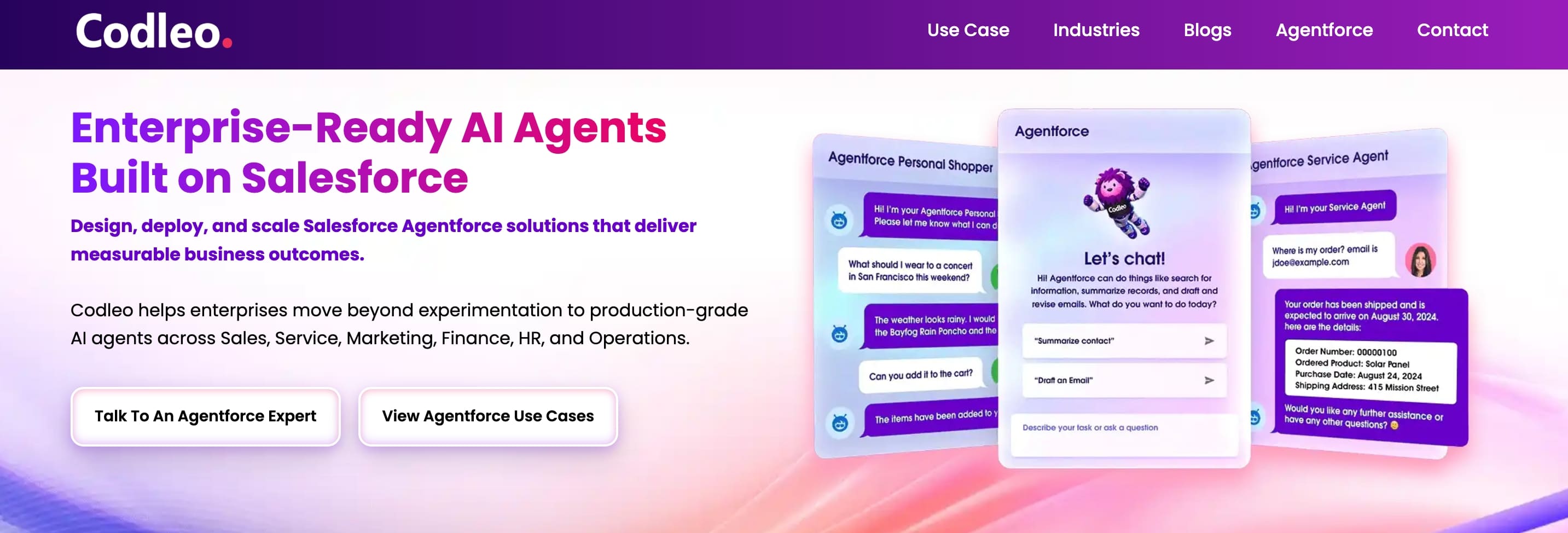
Agentforce and AI capabilities are increasingly appearing in Salesforce partner service portfolios, but the depth of experience can vary significantly.
If AI is part of your Salesforce roadmap, evaluate whether a potential partner can move beyond demonstrations and connect Agentforce to real business processes, trusted data, integrations, security requirements, and measurable outcomes.
| What to Evaluate | What to Ask the Partner | Evidence to Look For |
|---|---|---|
| Agentforce experience | What Agentforce use cases have you delivered? | Relevant project examples, demos, or documented use cases |
| Use-case strategy | How do you decide which processes should use an AI agent? | Discovery framework tied to business outcomes |
| Data readiness | How will you prepare Salesforce data for AI? | Data quality, Data Cloud, permissions, grounding, and governance approach |
| Integration capability | Can agents work with our ERP, support, ecommerce, or other systems? | Experience connecting Salesforce with external applications and APIs |
| Security & governance | How will you control what an agent can access and do? | Defined permissions, guardrails, testing, escalation, and governance processes |
| Human handoff | What happens when an agent cannot complete a task? | Clear escalation and human-in-the-loop workflows |
| Performance measurement | How will we know whether Agentforce is working? | Defined KPIs such as resolution, productivity, conversion, response time, or cost reduction |
| Post-launch optimization | What happens after the agents go live? | Monitoring, testing, refinement, and ongoing support plan |
Ask for Proof, Not Just an AI Capability Statement
Before selecting a Salesforce consulting partner for an Agentforce initiative, ask them to walk you through a relevant use case from business problem to deployment.
A credible discussion should explain:
-
what process was selected for AI;
-
why Agentforce was appropriate;
-
what Salesforce and external data were required;
-
how integrations and permissions were handled;
-
where human intervention remained necessary;
-
how the agent was tested before deployment; and
-
which business metrics were used to evaluate performance.
The objective is not simply to find a partner that offers Agentforce services. It is to determine whether the proposed team can connect AI capabilities to your existing Salesforce architecture and a measurable business requirement.
Salesforce Consulting Partner Selection Scorecard
Once you have shortlisted potential partners, compare them using the same criteria rather than evaluating each proposal differently.
Use this scorecard during discovery calls and proposal reviews:
| Evaluation Area | What to Verify | Partner A | Partner B | Partner C |
|---|---|---|---|---|
| Relevant Salesforce Experience | Similar projects, requirements and complexity | ☐ | ☐ | ☐ |
| Salesforce Product Expertise | Experience with the clouds and products in your scope | ☐ | ☐ | ☐ |
| Industry Experience | Understanding of your workflows, compliance and business model | ☐ | ☐ | ☐ |
| Case Studies & References | Evidence from comparable customer engagements | ☐ | ☐ | ☐ |
| Solution Architecture | Ability to explain architecture decisions and trade-offs | ☐ | ☐ | ☐ |
| Integration Expertise | Experience connecting Salesforce with your existing technology stack | ☐ | ☐ | ☐ |
| Data Migration & Governance | Clear approach to migration, quality, security and ownership | ☐ | ☐ | ☐ |
| Agentforce & AI | Relevant experience, data readiness, governance and measurable use cases | ☐ | ☐ | ☐ |
| Delivery Team | Visibility into the architects, consultants and developers doing the work | ☐ | ☐ | ☐ |
| Project Governance | Defined milestones, communication, risks and change management | ☐ | ☐ | ☐ |
| Training & Adoption | Plan for user enablement and adoption after deployment | ☐ | ☐ | ☐ |
| Post-Launch Support | Clear support, optimization and enhancement model | ☐ | ☐ | ☐ |
| Commercial Transparency | Clear scope, assumptions, exclusions and change-request process | ☐ | ☐ | ☐ |
Don't Choose Based on the Highest Number of Checkmarks Alone
The importance of each criterion depends on your project.
For example, an organization planning an Agentforce deployment may place greater emphasis on AI, data, security, and integration capabilities. A company replacing a legacy CRM may prioritize migration experience, architecture, and user adoption.
Use the scorecard to identify gaps and guide deeper conversations with each Salesforce consulting partner before making a final selection.
Final Thoughts: Choosing the Right Salesforce Consulting Partner
The right Salesforce consulting partner should bring more than technical expertise. Look for a team that understands your business requirements, has experience with similar Salesforce projects, can handle integrations and data complexity, and provides a clear delivery and post-launch support model.
Before making a decision, compare shortlisted partners on relevant project experience, Salesforce expertise, delivery team, customer evidence, commercial transparency, and—if it is part of your roadmap—Agentforce and AI capabilities.
Most importantly, choose based on fit for your specific project, not company size, certifications, or price alone.
Looking for a Salesforce Partner for Your Next Project?
Codleo Consulting helps organizations plan, implement, integrate, optimize, and support Salesforce across complex business environments.
Whether you're considering a new Salesforce implementation, improving an existing org, connecting Salesforce with other business systems, or exploring Agentforce, our team can assess your requirements and recommend an appropriate delivery approach.
 0
0
About the Author

 603 D-Mall Netaji Subhash Place, Delhi 110034 IND


