Publish date:
METHOD 01 / OFFICIAL SUPPORT
Method 1: Salesforce Help Portal (Best Place to Start)
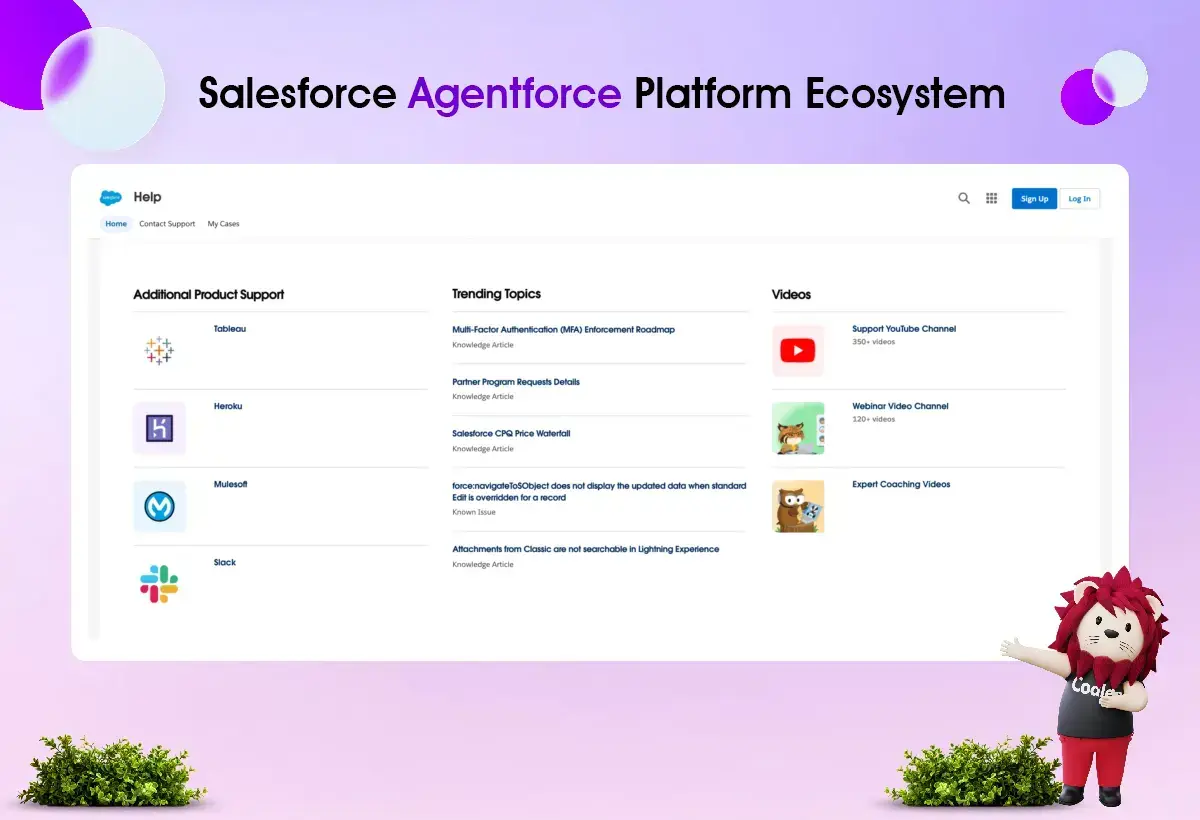
Salesforce Help is the main place to get support. You can search documentation, create and track cases, and, depending on your plan, start a chat or request a call. Creating a case here also gives you a written record of the issue, which helps if it needs to be escalated later.
Open Salesforce Help →
BEFORE YOU SUBMIT A CASE
First, Check If It's a Salesforce-Wide Issue
Before you raise a case, check Salesforce Trust. It shows service status, planned maintenance, and known incidents for your instance. If there's an outage already listed, you can follow Salesforce's updates there instead of waiting for an individual case response.
You can also search Known Issues in Salesforce Help to see if others have reported the same problem and whether a workaround exists.
Salesforce Known Issues
Look for confirmed bugs, existing reports, and available workarounds.
Search Known Issues →
STEP-BY-STEP INSTRUCTIONS
How to Create a Case in Salesforce Help
You need a Salesforce login with the appropriate support access to create a case. The exact screens can change over time, but the process usually looks like this:
01
Log In to Salesforce Help
Visit help.salesforce.com, or open Help from inside Salesforce using the ? icon at the top right.
02
Click Contact Support
Find the Contact Support option to access the support channels available to your account.
03
Choose Create a Case
Select Create a Case. Depending on your Success Plan, chat or callback options may also appear.
04
Select the Issue Type
Choose the category that best fits your request, such as a technical or product issue, or a billing question.
05
Choose the Salesforce Product
Select the product or cloud affected by the issue to help route your case correctly.
06
Check Your Org ID
Confirm the Organization ID. If it isn't filled in automatically, find it under Setup > Company Information.
07
Describe the Issue Clearly
Write a specific subject, explain the problem in detail, and choose the severity that matches the business impact.
08
Attach Supporting Files
Upload screenshots, error messages, or log files. Check the attachment limits displayed on the form.
09
Add Colleagues for Updates
If the option is available, include teammates who should receive updates or help answer follow-up questions.
10
Submit and Save Your Case Number
Click Submit or Create Case. Save the confirmation and case number so you can track progress and follow up.
Quick Tip: Keep These Two Details Handy
Save your case number and Org ID somewhere easy to find. You'll need them if you call Salesforce Support, follow up on your case, or request an escalation.
MORE SELF-SERVICE RESOURCES
What Else You'll Find in Salesforce Help
| Resource |
What It's Useful For |
| Documentation |
Official guides, setup steps, and release notes for Salesforce products. |
| Known Issues |
Bugs Salesforce has already confirmed, including their status and available workarounds. |
| Trailhead |
Free learning modules to understand features and troubleshoot common problems. |
| Trailblazer Community |
Answers and practical advice from other Salesforce users and experts. |
| Events and Webinars |
Live sessions covering new features, Salesforce releases, and best practices. |
METHOD 02 / PHONE SUPPORT
Method 2: Phone Support by Region
You can call Salesforce support for urgent issues, but what's available depends on your Success Plan. Critical (Severity 1) issues are typically supported 24/7 under applicable support terms, while broader phone access usually comes with paid plans.
Whenever possible, create a case first so the support agent can find your account details, understand the issue, and review the information you've already provided.
PHONE SUPPORT ELIGIBILITY
Who Can Use Phone Support?
| Success Plan |
Typical Phone Access* |
| Standard Included with eligible licenses |
Primarily for critical Severity 1 issues, when supported by the product and plan. |
| Premier Paid support plan |
Phone support for additional severity levels, with enhanced response targets. |
| Signature Premium support plan |
Enhanced support coverage, including dedicated technical contacts and 24/7 assistance for eligible issues. |
*Phone availability, coverage hours, and response targets depend on your Salesforce product, Success Plan, and contract. Check the official Salesforce Success Plans information for current terms.
FIND YOUR SUPPORT NUMBER
How to Find the Right Phone Number
Salesforce phone numbers vary by country and language, and they're updated periodically. The safest way to find the correct number is through your own Salesforce Help account.
01
Log In
Open Salesforce Help and sign in with your account.
02
Contact Support
Select Contact Support to view the available support channels.
03
Find the Phone Option
Look for Call Us or the phone option, if available, to find contact details for your region and plan.
Find Your Support Number →
Important: Avoid relying on phone numbers copied from old blog posts or forums. They may be outdated or may not apply to your support plan.
REGIONAL AVAILABILITY
Language Support by Region
English support is generally available around the clock for eligible critical issues. Support in other languages is usually offered during specified regional business hours.
| Region |
Languages Commonly Supported* |
| North America (AMER) |
English, plus French for Canada |
| Latin America (LACA) |
English, Spanish, and Portuguese |
| Europe, Middle East & Africa (EMEA) |
English, plus languages such as French, German, Italian, Dutch, Spanish, and Portuguese |
| Asia-Pacific (APAC) |
English, plus languages such as Mandarin and Korean |
| Japan |
Japanese, with English available through applicable APAC support channels |
*This is a general regional overview, not a guaranteed language-availability list. Confirm current language options and operating hours in Salesforce Help.
BEFORE YOU MAKE THE CALL
Have These Details Ready Before You Call
Keeping the following information handy helps the support agent identify your account and understand the issue faster.
✓ Your name and work email
✓ Your company or account name
✓ Your Salesforce Org ID
✓ Your case number, if available
✓ The affected Salesforce product or cloud
✓ A short problem summary and number of affected users
Quick Tip: Create a Case Before Calling
Submit a case through the Salesforce Help portal before making your call whenever possible. The support agent can review your issue straight away, and you'll have a written record of the conversation, attachments, and follow-up actions.
ACCESSIBLE SUPPORT OPTIONS
Accessibility Support
Salesforce provides accessibility-related support resources for customers who need them. In the United States, people with hearing or speech impairments can also use the Telecommunications Relay Service by dialing 711.
Check Salesforce Help for current accessibility support contact information and available assistance options.
Visit Salesforce Help →
GLOBAL SUPPORT DIRECTORY
How to Contact Salesforce Support by Phone Worldwide
Salesforce support phone numbers vary by region and country. The following tables organize the regional contact numbers and available support languages shown in the reference directory.
Phone support eligibility, operating hours, toll-free access, and available languages may depend on your Salesforce product, Success Plan, and location.
Salesforce Support Phone Numbers by Region
| Region |
Phone Number in Reference |
| AMER (North America) |
1-800-667-6389 |
| LACA (Latin & Central America) |
+1-866-450-8123 |
| EMEA (Europe, Middle East & Africa) |
00800 7253 3333 |
| APAC (Asia-Pacific) |
+65 6302 5700 |
| Japan |
0120-733-251 |
AMER REGION
How to Call Salesforce Support in the AMER Region
| Region/Country |
Phone Number |
Available Languages |
| AMER |
1-800-667-6389 |
English |
| Canada |
1-877-282-1987 |
French, English |
LACA REGION
How to Call Salesforce Support in the LACA Region
| Region/Country |
Phone Number |
Support Languages |
| LACA |
+1-866-450-8123 |
Spanish, English |
| Argentina |
0800-4442631 |
Spanish, English |
| Brazil |
0800-8911887 |
Portuguese, English |
| Chile |
123-0-020-5564 |
Spanish, English |
| Colombia |
01-800-518-4149 |
Spanish, English |
| Mexico |
001-8664508123 |
Spanish, English |
EMEA REGION
How to Call Salesforce Support in the EMEA Region
| Region/Country |
Phone Number |
Support Languages |
| EMEA |
00800 7253 3333 |
English |
| Austria |
0800-295282 |
German, English |
| Belgium |
0800-76981 |
French, English |
| Czech Republic |
0080080001415 |
English |
| Denmark |
80253469 |
English |
| Finland |
0800-9-12734 |
English |
| France |
0 800 908 534 |
French, English |
| Germany |
0800-1822338 |
German, English |
| Greece |
00800 7253 3333 |
English |
| Ireland |
00800 7253 3333 |
English |
| Israel |
1-80-9216278 |
English |
| Italy |
800 782619 |
Italian, English |
| Luxembourg |
00800 7253 3333 |
English |
| Netherlands |
0800 0200431 |
Dutch, English |
| Netherlands Antilles |
001-8669246142 |
Dutch, English |
| Norway |
800-12363 |
English |
| Portugal |
800-8-55236 |
Portuguese, English |
| Russia |
8-10-8002-4414011 |
English |
| South Africa |
0800981351 |
English |
| Spain |
800300229 |
Spanish, English |
| Sweden |
0200 285660 |
English |
| Switzerland |
800000010 |
German, English |
| UAE |
800-035703814 |
English |
| UK |
0800 0921223 |
English |
APAC REGION
How to Call Salesforce Support in the APAC Region
| Region/Country |
Phone Number |
Support Languages |
| APAC |
+65 6302 5700 |
English |
| Australia |
1800 667 638 |
English |
| China National |
4001-201224 |
Mandarin, English |
| Hong Kong |
800-967-655 |
Mandarin, English |
| India |
000800-001-6000 |
English |
| Indonesia |
0018030114118 |
English |
| Korea |
00308-1-21566 |
Korean, English |
| Malaysia |
1-800-8-13698 |
English |
| New Zealand |
0800 450 064 |
English |
| North China |
10-800-712-1782 |
Mandarin, English |
| Philippines |
180011141897 |
English |
| South China |
10-800-120-1782 |
Mandarin, English |
| Singapore |
800-1301448 |
English |
| Taiwan |
00801-138701 |
Mandarin, English |
| Thailand |
001-800-12-066-6329 |
English |
JAPAN
How to Call Salesforce Support in Japan
| Country |
Phone Number |
Support Languages |
| Japan |
0120-733-251 |
Japanese |
Important: Verify Phone Numbers Before Calling
The numbers and languages above are reproduced from the supplied reference images and have not been independently verified as current. Salesforce may change regional phone numbers, support hours, and language availability.
For the most reliable contact information, sign in to Salesforce Help, open Contact Support, and check the phone options available for your account and Success Plan.
Need the Latest Salesforce Support Number?
Visit the official Salesforce Help portal to confirm the appropriate support channel for your region and subscription.
Check Official Salesforce Help →
METHOD 03 / DIGITAL SUPPORT
Method 3: Live Chat and AI Help
Salesforce Help offers chat-based support in two ways: an AI assistant for quick answers, and live chat with a support agent for customers on eligible Success Plans. Chat works well for non-critical issues when you want a quick back-and-forth without waiting on the phone.
SELF-SERVICE SUPPORT
AI Help in Salesforce Help
Salesforce Help includes AI-powered assistance. You can type your question in plain language and get suggested answers, help articles, and troubleshooting steps.
It's a good first stop for how-to questions and common errors, and it can often point you to a fix in a few minutes.
If the AI can't solve your problem, you can usually move on to creating a case or, if your plan includes it, talking to a person.
Explore Salesforce Help →
HUMAN SUPPORT
Live Chat with a Salesforce Agent
Live chat with a support agent is typically available to customers on eligible paid Success Plans, such as Premier and Signature.
It's useful when:
- The issue isn't critical, but you want help today
- You need to share details step by step
- You'd rather not stay on hold
STEP-BY-STEP GUIDE
How to Start a Live Chat
02
Contact Support
Click Contact Support to view the available options.
03
Choose Chat
Select the chat option if it's available under your Success Plan.
04
Describe the Issue
Select the issue type and add a short, clear description of the problem.
05
Connect with an Agent
Wait for the next available agent and share any additional details they request.
Chat transcripts are usually saved to your case, so you can refer back to the conversation later.
Quick Tip: Prepare Before Starting a Chat
Keep your Org ID, error message, and screenshots ready before starting the chat. Providing this information upfront helps reduce unnecessary back-and-forth and makes troubleshooting easier.
CHOOSE THE RIGHT CHANNEL
When to Use Chat vs Phone vs Case
| Situation |
Best Option |
| Quick how-to question |
AI Help or Trailblazer Community |
| Non-critical issue, want help today |
Live Chat |
| Critical issue affecting many users |
Create a Severity 1 Case, Then Call |
| Complex issue that needs investigation |
Create a Detailed Case |
Chat, phone access, and severity-based support vary by Salesforce product and Success Plan. Severity 1 should only be selected when the issue meets Salesforce's applicable critical-impact criteria.
SUPPORT CASE PRIORITY
Salesforce Case Severity Levels
When you create a Salesforce support case, you choose a severity level from 1 to 4. Severity 1 is for critical problems that stop your business with no workaround, while Severity 4 is for minor issues. Your choice helps determine how Salesforce prioritizes your case and which response targets apply.
Choosing the right severity helps Salesforce understand the business impact and direct your case to the appropriate support process.
SEVERITY 1 THROUGH 4
Salesforce Support Severity Levels Explained
| Severity |
Label |
When to Use It |
Example |
| Severity 1 |
Critical |
Core business is stopped, there's no workaround, and the impact is serious. |
Users can't log in to production, or a key system is down for everyone. |
| Severity 2 |
Urgent |
A major function isn't working, and there's no workaround. |
Opportunities can't be saved, or a key integration has stopped. |
| Severity 3 |
High |
An important feature is affected, but a workaround exists. |
A report is failing, but the data can be pulled another way. |
| Severity 4 |
Medium |
Minor issue or general question with little business impact. |
A layout or display issue, or a how-to question. |
Important: Response times depend on your Salesforce Success Plan and product. Severity 1 issues generally receive around-the-clock coverage where eligible, while lower severity levels may follow defined business support hours. Check your plan for the exact response targets and severity definitions.
PRACTICAL GUIDANCE
How to Choose the Right Severity
01
Be Honest About the Urgency
Marking a minor issue as Severity 1 won't necessarily get it fixed faster. Salesforce may reassess the severity, which can create unnecessary delays.
02
Think About Business Impact
How many users are affected? Is revenue, customer service, or compliance at risk? Is there a workaround that allows work to continue?
03
Explain the Impact Clearly
Don't just select a severity level. Explain what has stopped working, who is affected, and why the problem matters to your business.
04
Update the Severity If Things Change
If a workaround stops working or more users become affected, update the case and explain the change in business impact.
EXAMPLE / DESCRIBING BUSINESS IMPACT
What Should You Write in Your Salesforce Support Case?
TOO VAGUE
"Salesforce isn't working. Please fix it urgently."
CLEAR BUSINESS IMPACT
"40 sales reps can't save opportunities, and quarter-end orders are blocked. The issue started at 9:15 AM, and we haven't found a workaround."
CRITICAL ISSUE CHECKLIST
What to Do for a Severity 1 Issue
For a genuine Severity 1 issue, create the support case first, then contact Salesforce by phone if that option is available under your plan. Keep your case number ready so the agent can quickly locate the issue and its supporting details.
Open Salesforce Help →
SALESFORCE SUPPORT BEST PRACTICES
How to Get Your Salesforce Case Resolved Faster
Salesforce cases move faster with a clear subject, a detailed description, the right severity, and supporting files from the start. Respond quickly to agent questions, keep your Org ID handy, and escalate politely with business impact if a critical case isn't moving.
From our experience supporting Salesforce orgs, many avoidable delays come from missing information. These eight practical habits can help reduce unnecessary back-and-forth and make troubleshooting more efficient.
01
Write a Clear Subject Line
The subject is the first thing a Salesforce support agent sees. Make it specific enough to communicate the problem and its impact.
| Weak Subject |
Strong Subject |
| "Login issue" |
"Production org: 47 users can't log in since 9 AM ET, sales blocked (Severity 1)" |
| "Report broken" |
"Pipeline report shows no data since Summer release, finance close affected" |
| "Integration error" |
"ERP order sync failing with 'INVALID_FIELD' error since yesterday" |
Note: The severity in your subject should match the actual business impact and Salesforce's applicable severity criteria.
02
Give Full Details in the Description
A detailed case description helps the support agent understand the issue without first asking for basic information.
Exact Error Message
Copy and paste the exact error message instead of rewriting it.
Steps to Reproduce
Explain what actions trigger the issue and what happens afterward.
When It Started
Mention the start time and any recent deployment, release, or new application.
Business Impact
State how many users and which business processes are affected.
Troubleshooting Already Done
List what you've already tried so the agent doesn't repeat the same steps.
03
Attach Proof Upfront
Add screenshots, short screen recordings, debug logs, or error files when you create the case. This can reduce follow-up requests and save time, especially when support teams work across time zones. Remove or mask sensitive information before sharing.
04
Reply Quickly
Cases may pass between agents in different regions. If a question sits unanswered for a day, progress can slow. Turn on email notifications and aim to respond the same business day whenever possible.
05
Escalate the Right Way
If a Severity 1 or 2 case isn't progressing, request an escalation through the case or an eligible phone channel. Explain the duration, affected users, and business risks. Inform your Salesforce account team or Signature contact if applicable.
06
Keep Your Org ID Ready
Find your Org ID in Salesforce Setup under Company Information. Include it in your support case and keep it handy for calls so agents can identify your organization quickly.
07
Reproduce the Issue in a Sandbox
If you can reproduce the problem in a sandbox, Salesforce may find it easier to investigate. A sandbox also lets you test potential fixes without changing production directly.
08
Check Salesforce Trust and Known Issues First
Before spending time on a case, check for service outages and confirmed issues. You may find an existing workaround or status update.
Check Salesforce Trust →
KEY TAKEAWAY
Better Case Details Can Mean Faster Troubleshooting
A well-written Salesforce support case gives the agent a clearer starting point. Include the issue, business impact, evidence, and steps you've already taken. Stay responsive and use the appropriate escalation channel when necessary.
Open Salesforce Help →
BEYOND STANDARD SUPPORT
When Salesforce Support Isn't Enough
Salesforce support focuses on the Salesforce platform itself: bugs, outages, and standard features. It generally doesn't fix your custom code, third-party apps, complex automation, custom integrations, data migrations, or configuration choices. For those, you'll need your internal team, the app vendor, or a Salesforce partner.
This is where many teams get stuck. They raise a case, wait for a response, and then hear that the problem is "outside the scope of support." Meanwhile, the issue is still affecting users and business operations.
SUPPORT RESPONSIBILITIES
Who to Contact for Which Salesforce Issue
| Type of Issue |
Salesforce Support |
Who Usually Fixes It |
| Platform outage or widespread Salesforce login problem |
✓ Yes |
Salesforce |
| Bug in a standard Salesforce feature |
✓ Yes |
Salesforce |
| Error in custom Apex code or Lightning components |
Usually not |
Your developers or a Salesforce partner |
| Problem with a Flow or custom automation |
Limited |
Your admin or a Salesforce partner |
| Issue with a third-party AppExchange app |
Usually not |
App vendor, then your partner if needed |
| Custom API or ERP integration failing |
Usually not |
Integration team or Salesforce partner |
| Data migration or data quality problems |
Usually not |
Your admin or a Salesforce partner |
| Incorrect configuration or setup |
Usually not |
Your admin or a Salesforce partner |
| New features, enhancements, or AI implementation |
Generally not implementation work |
Your internal team or a Salesforce partner |
Support scope may vary by Salesforce product, Success Plan, and contractual services. Salesforce may provide guidance on some configuration or development issues without implementing the fix.
BEYOND PLATFORM TROUBLESHOOTING
How a Salesforce Partner Helps
A Salesforce support partner looks after your specific Salesforce org, not just the platform. Depending on your support agreement, that means they can:
01
Fix Custom Code and Automation
Troubleshoot Apex, Lightning components, Flows, and custom business automation.
02
Monitor and Repair Integrations
Investigate API failures and troubleshoot connections between Salesforce and external systems.
03
Coordinate with AppExchange Vendors
Work with third-party app providers to diagnose compatibility and application issues.
04
Improve Data and Configuration
Resolve data quality issues, clean up configurations, and improve existing processes.
05
Prepare for Salesforce Releases
Test customizations and important workflows before new releases affect users.
06
Manage Salesforce Support Cases
Help raise, track, and follow up on platform-related support cases with Salesforce.
With the right support partner, your team has a central point of contact to coordinate troubleshooting, whether the issue comes from Salesforce itself or your organization's custom setup.
SALESFORCE SUPPORT FROM CODLEO
How Codleo Can Help
Codleo is a Salesforce Summit Partner with 500+ Salesforce certifications and 18+ solution architects. Our team provides 24x7 L1 to L5 Salesforce support through an ITIL-aligned helpdesk, covering custom code, integrations, automation, data, and release testing for companies in the USA and worldwide.
Summit Salesforce Partner
500+ Salesforce Certifications
18+ Solution Architects
24x7 L1 to L5 Support
NEED EXPERT HELP?
Stuck with an Issue Salesforce Won't Cover?
Tell us what's happening. Codleo's certified Salesforce consultants can review the problem, investigate the cause, and help you work toward a solution.
Talk to a Salesforce Expert →
SUPPORT FOR SALESFORCE PRODUCTS
Support for Tableau, Slack, Heroku, and MuleSoft
Salesforce-owned products such as Tableau, Slack, Heroku, and MuleSoft have their own help centers and support options. Many support resources are connected to Salesforce Help, but the best starting point depends on the product, your subscription, and the type of issue you're experiencing.
PRODUCT SUPPORT DIRECTORY
Where to Get Support for Each Product
| Product |
Where to Get Help* |
Good to Know |
| Tableau |
Tableau Support or Salesforce Help |
Covers Tableau Cloud, Tableau Server, Tableau Desktop, and Tableau Prep. Check the Tableau status page for service incidents first. |
| Slack |
Slack Help Center |
Use the Contact Us option available through Slack's support experience. Check Slack's status page for service issues. |
| Heroku |
Heroku Help |
Support options depend on your Heroku plan. Check the Heroku status page before raising a ticket. |
| MuleSoft |
MuleSoft Help or Salesforce Help |
Enterprise customers may have access to case-based support. Community resources are also available for troubleshooting and guidance. |
*Support channels and eligibility can change. Always confirm current options through the product's official help center and your subscription agreement.
BEFORE CONTACTING SUPPORT
A Few Quick Tips
01
Check the Product Status First
Before submitting a ticket, check the product's status page for outages, service interruptions, or scheduled maintenance.
02
Keep Subscription Details Ready
Have your account information, subscription details, and relevant product identifiers available before contacting support.
03
Use the Correct Support Portal
Submit your request through the right product portal. Raising a Tableau or MuleSoft case through an unrelated channel may delay routing.
04
Coordinate Cross-Product Issues
If an issue involves multiple products, such as Salesforce and MuleSoft, involve the relevant technical teams or a Salesforce partner to identify the root cause.
CROSS-PRODUCT TROUBLESHOOTING
What If the Issue Involves More Than One Salesforce Product?
Problems involving Salesforce and another platform can be harder to diagnose. For example, a failed Salesforce and MuleSoft integration might originate in Salesforce configuration, MuleSoft processing, an API connection, or an external system.
A Salesforce partner can help investigate where the failure starts, coordinate with the appropriate support teams, and work toward a resolution without unnecessary back-and-forth between vendors.
NEED INTEGRATION SUPPORT?
Need Help Troubleshooting Salesforce Integrations?
Codleo's Salesforce consultants can help investigate integration issues, troubleshoot custom configurations, and coordinate technical fixes across connected systems.
Explore Salesforce Support Services →
KEY TAKEAWAYS
Final Thoughts
Knowing how to contact Salesforce support is only part of the job. The other part is using the right channel, choosing the right severity, and giving enough detail so the support team can start working on your issue straight away.
For platform problems, such as outages, login issues, or bugs in standard features, Salesforce Help, phone support, and chat can be effective options, depending on your Success Plan.
But if your business runs on Salesforce, relying only on official support can leave gaps. Custom code, integrations, automation, data issues, and configuration problems often require assistance beyond standard platform support. And these can be the issues that affect your teams the most.
That's where having a Salesforce partner on your side makes a real difference. A team that understands your org can troubleshoot setup issues and coordinate with Salesforce when the problem involves the underlying platform.
The Right Support Makes the Difference
SALESFORCE OFFICIAL SUPPORT
Platform-Level Issues
Outages, standard feature bugs, login issues, and eligible product support cases.
SALESFORCE SUPPORT PARTNER
Org-Specific Issues
Custom development, integrations, Flows, automation, configuration, and ongoing maintenance.
FREE 30-MINUTE CONSULTATION
Need Help with a Salesforce Issue Right Now?
Codleo is a Salesforce Summit Partner providing 24x7 L1 to L5 support across Sales Cloud, Service Cloud, Marketing Cloud, Agentforce, integrations, and more.
Book a free 30-minute consultation. Our certified Salesforce consultants will review your issue and recommend practical next steps, with no obligation.
Book a Free Salesforce Consultation →
 0
0
About the Author
Gaurav Pundir
Gaurav is a 7x Salesforce certified Developer with an experience of 3 years in the Salesforce ecosystem. He has worked on projects in the insurance and manufacturing domain.
FAQ
alesforce offers various support options, including self-service resources and managed
services. You can use the Salesforce help portal, call for phone support, or chat
online. If you need urgent help with Salesforce, consider contacting a Salesforce
consulting partner for assistance.
To raise a case with the Salesforce support team, you need to follow the steps below ?
or contact a Salesforce consultant directly
-
Select �Get Support� in the Help portal menu,
-
Click �Create a Case. �
-
Choose �Product� or �Technical Support�.
-
Select the product where you are having an issue
-
Add issue details
-
Click �Create Case. �
Yes, the Salesforce live chat option is available to Premier and Signature customers
with a Success Plan. To start a new Live Chat session, follow these steps:








 16192 Coastal Highway Lewes, Delaware 19958 USA


